 THE PCOS BRIEF
Movement / 12-week study
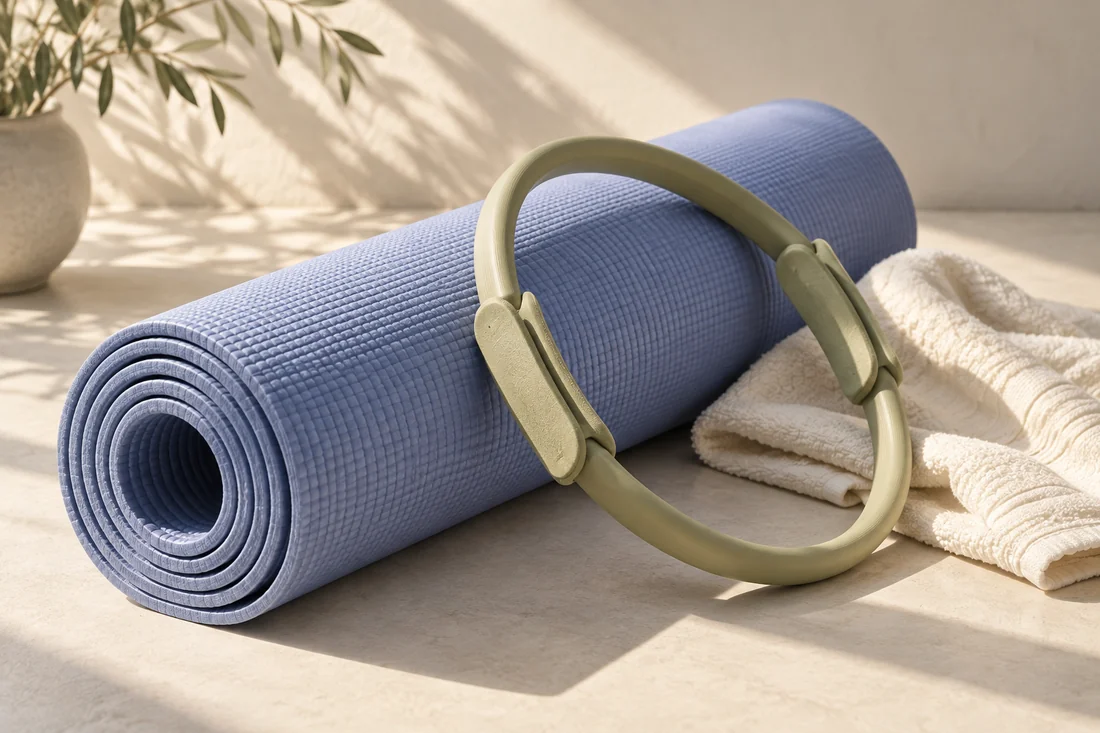
Does Pilates help PCOS period pain?
A 12-week study of 26 women found less pain and shorter cycles
We use our own and third-party cookies and other tracking technologies on our website to enable website functionality, analyze website use and performance, support advertising and marketing, and personalize your experience. For more information, see our Privacy Policy.
 Coming soon for iOS
Sachi / The PCOS wellness app
Sachi brings lifestyle research, practical goals, and symptom tracking together in one app for PCOS.
The idea behind Sachi
Reading more doesn’t always make the next step clearer. Sachi brings lifestyle research, practical goals, and everyday tracking into one place.
01 / Made for the everyday
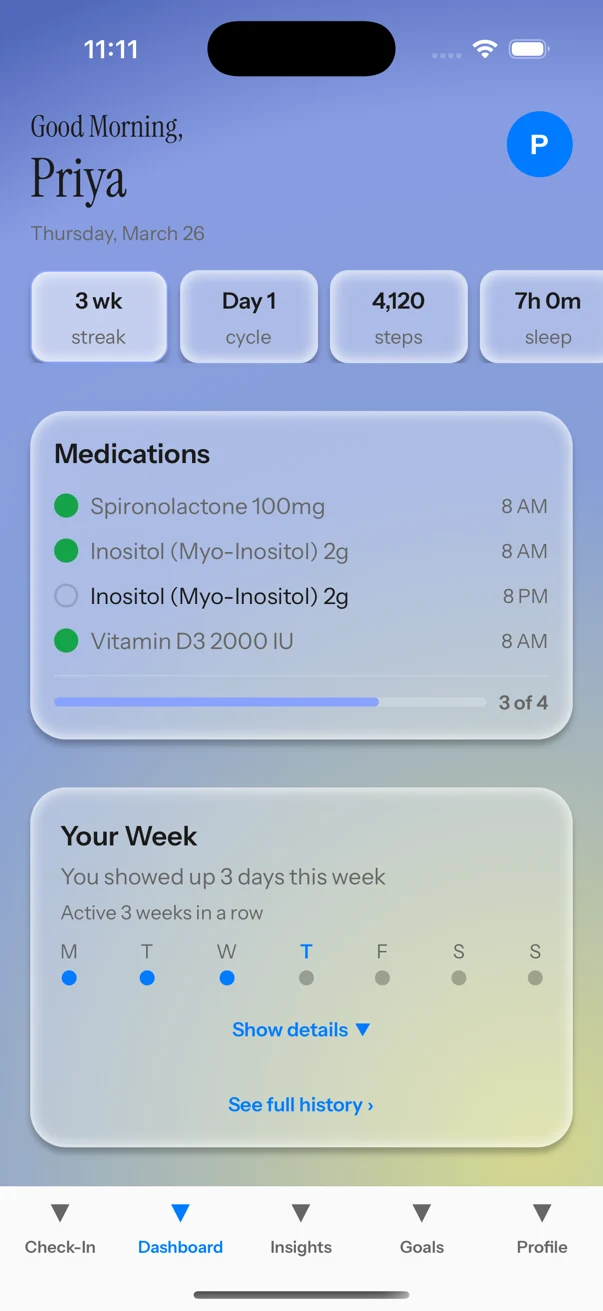
Choose the symptoms and everyday experiences you want to record, from cycle changes to energy, mood, and sleep.
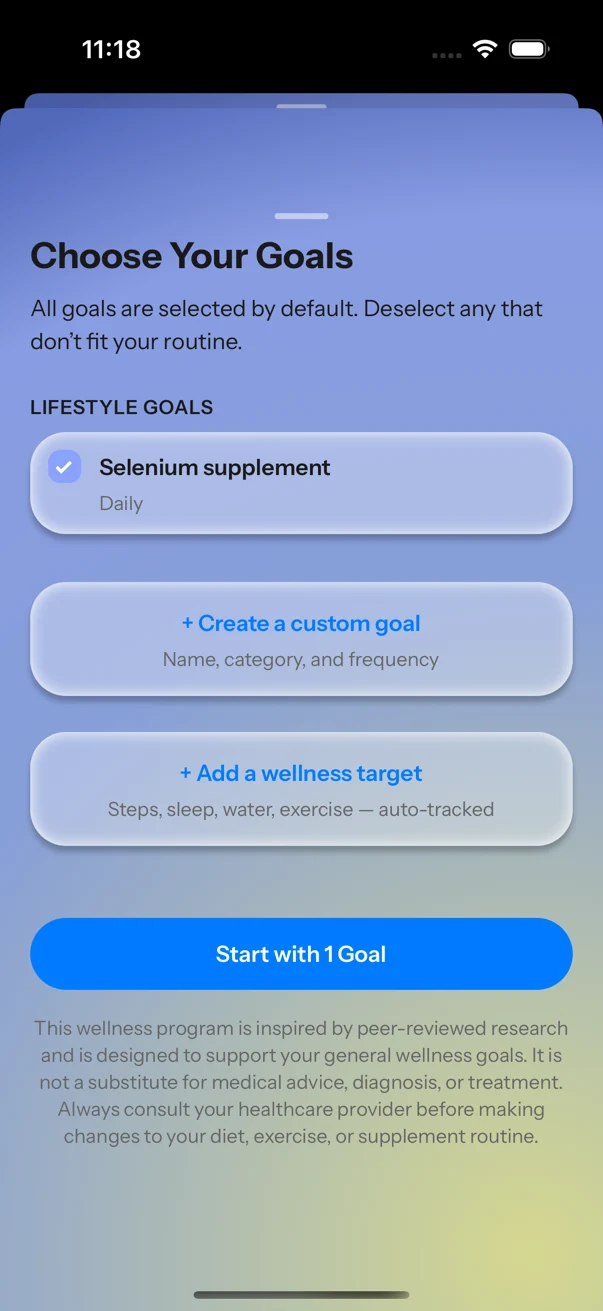
Explore practical goals inspired by lifestyle research. Choose one that fits into your day.
Review what you’ve recorded and bring that context to conversations with your healthcare provider.
App preview.
Scene 1 of 3. Check in.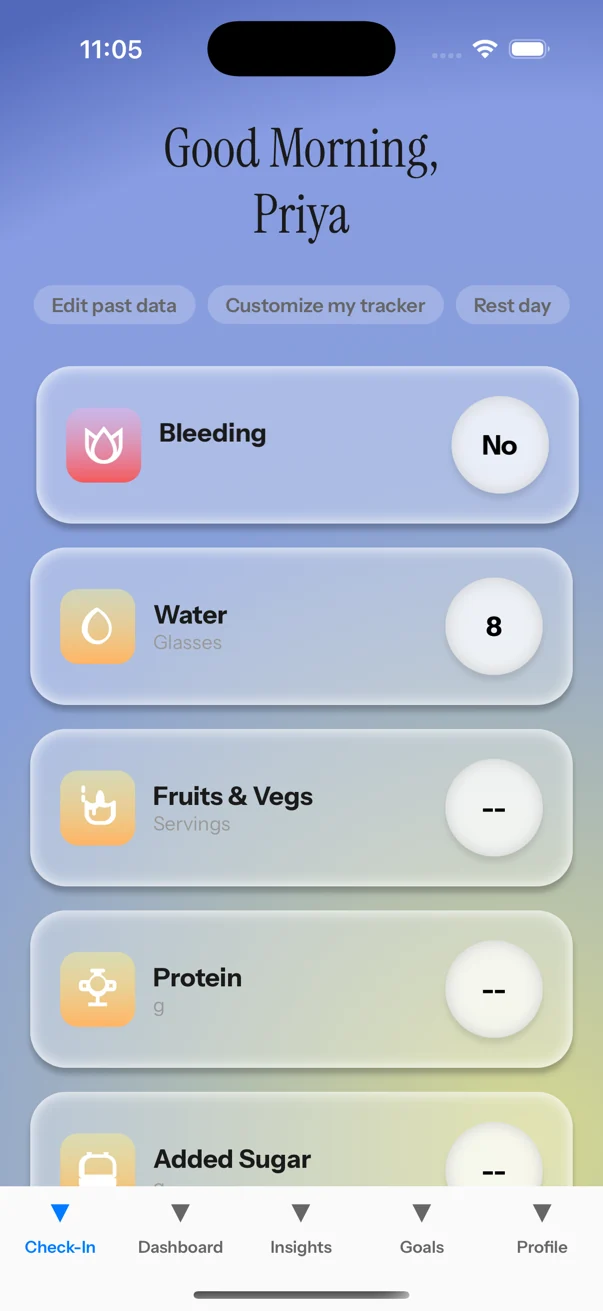
02 / Curiosity deserves context
Follow the references behind Sachi’s research summaries. Read the study and its limitations for yourself.
See what the study found, and where its limits are.
Read a sample PCOS BriefThe questions we ask when reading a study.
Research can inform a choice.
It doesn’t have to run your life.
03 / The PCOS Brief
One PCOS lifestyle study each week: what it found, where its limits are, and why it matters.
Browse the PCOS Brief
THE PCOS BRIEF
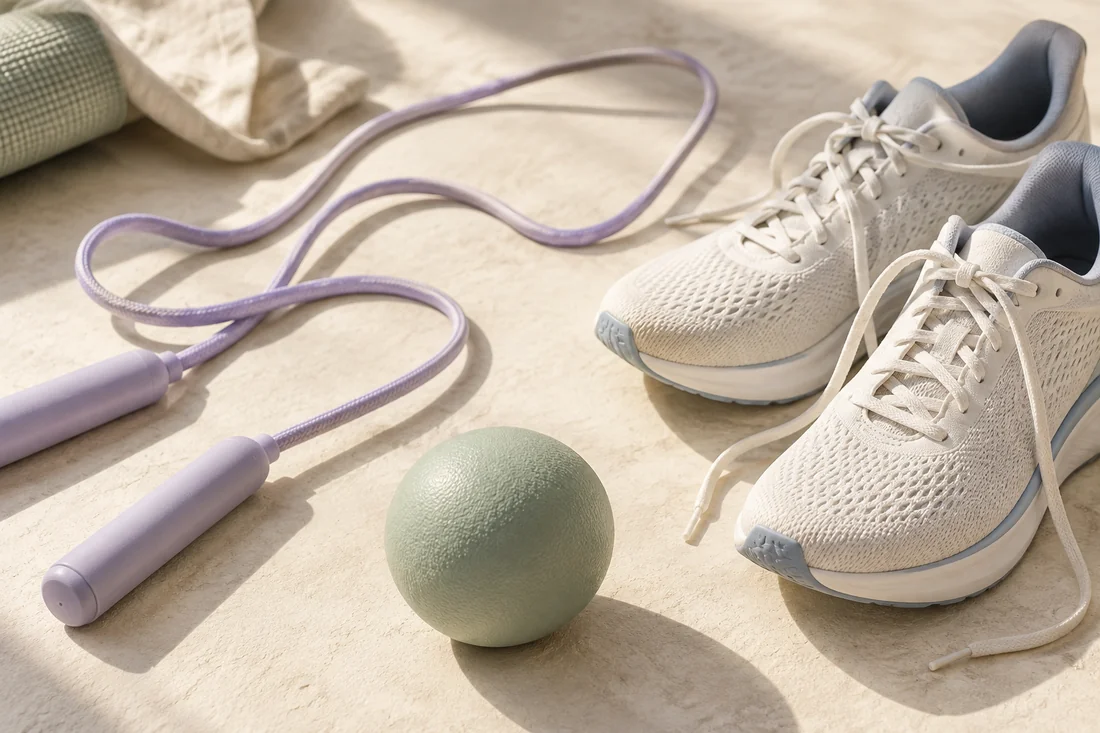
Movement / 12-week study
A 12-week study of 26 women found less pain and shorter cycles
 THE PCOS BRIEF
Movement / Randomized trial
After 12 weeks the free androgen index fell further with intervals
 THE PCOS BRIEF
Research / A closer look
A trial in women with a normal BMI found both lowered insulin and androgens
04 / Why we’re here
We met at Columbia and started with a question: how could lifestyle research become more useful in everyday life? Conversations with people living with PCOS helped shape what Sachi should make easier.
Columbia MBA. Building Sachi around the experiences and questions shared in our user research.
Meet Daniella ↗MPH in Epidemiology, Columbia Mailman School of Public Health. Leads Sachi’s research work and writes the PCOS Brief.
Get in touch ↗A few useful answers
Sachi includes cycle tracking alongside other symptoms and everyday experiences, such as energy, mood, and sleep. It also brings lifestyle research and practical goals into the same app.
We’re preparing to launch on iOS. App pricing and the download link will be available at launch.
No. Sachi shares wellness information and supports tracking. Discuss any changes with your healthcare provider.
Our privacy policy explains how we handle app data, website analytics, and the separate newsletter subscription. Read our privacy policy.
Yes. The PCOS Brief is free to read online or receive by email. You don’t need an app account.
In May 2026, PCOS was renamed polyendocrine metabolic ovarian syndrome (PMOS). You’ll still see PCOS in our newsletter name and earlier articles. Read our guide to the name change.
A new perspective on the everyday
Sachi for iOS. Launching soon.
Read the PCOS Brief Downloads and pricing will be available at launch.